The Role of a Professional Customs Broker
The U.S. Customs Clearance Process — What Your Broker Does
Documentation review: Verifies that the commercial invoice, packing list, bill of lading/AWB, and any permits are accurate and complete before cargo departs the foreign port.
ISF filing (ocean): Submits Importer Security Filing to CBP at least 24 hours before vessel loading — protecting you from the $5,000+ late-filing penalty.
Customs entry filing: Electronically files the formal entry through ACE, applies the correct HTS codes and duty rates, calculates all applicable fees, and pays duties on your behalf.
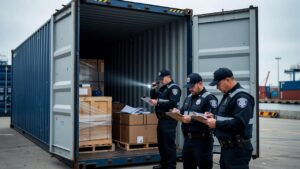
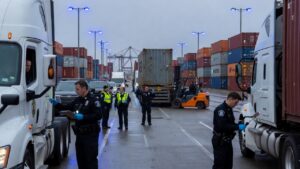
Exam coordination: If CBP selects the shipment for physical or X-ray exam, the broker coordinates with CBP officers, the carrier, and the exam site to minimize delay and cost.
Entry liquidation and post-entry: Monitors entry liquidation (CBP’s final duty determination), files protests if CBP’s classification or valuation differs from the entry, and manages duty drawback claims if applicable.
Benefits of Hiring a Professional Customs Broker in 2025–2026
Penalty protection: CBP’s penalty enforcement is at an all-time high in 2025–2026. Brokers maintain documentation that demonstrates good-faith compliance — your strongest defense in a CBP audit.
UFLPA navigation: For importers with any Chinese supply chain exposure, brokers understand exactly what documentation CBP requires to overcome the Xinjiang forced-labor presumption.
Bond management: Proactively monitors your duty obligation and recommends bond increases before CBP issues an insufficiency notice — preventing disruption to your import activity.
Time savings: A licensed broker handles all CBP communication, document preparation, and exam coordination. Your team focuses on your business — not customs paperwork.
De minimis compliance: With the global suspension of the $800 exemption, every shipment now requires professional customs handling. Brokers scale to handle any volume.
How to Choose the Right Customs Broker for Your Business
- CBP License: Verify via CBP’s license lookup that the broker is currently licensed and in good standing
- Specialization: Choose a broker with expertise in your product category — FDA-regulated goods, electronics, textiles, automotive, etc. each have unique compliance requirements
- Port access: Confirm the broker can handle your cargo at all U.S. ports where you receive shipments
- ACE integration: Modern brokers use ACE-connected software for real-time entry tracking and instant CBP communication
- Responsiveness: In time-sensitive situations (exam holds, CBP detentions, missing permits), broker response time directly affects your costs
- Pricing transparency: Reputable brokers provide itemized fee schedules — customs brokerage fees, bond fees, exam fees — with no surprises