Understanding Customs Clearance for Ocean Freight
- Tariff codes (HTS): 10-digit Harmonized System codes used to classify goods and determine applicable duties and taxes
- Customs value: The declared value of goods (including cost, insurance, and freight — CIF) used to calculate ad valorem duties
- ISF (Importer Security Filing): A mandatory 10+2 data filing required at least 24 hours before vessel loading at a foreign port — non-filing penalties start at $5,000 per violation
- ACE (Automated Commercial Environment): CBP’s mandatory electronic filing system for all formal customs entries
The Ocean Freight Customs Clearance Process
Step 2 — Compile customs entry documents: Commercial invoice, packing list, bill of lading (OBL or telex release), and any applicable permits or licenses (FDA prior notice for food/cosmetics, USDA permits for agricultural products).
Step 3 — File the customs entry (ACE): Your broker submits a formal entry (Type 01 Consumption Entry for most commercial imports) through ACE. CBP reviews and either releases, selects for exam, or holds the shipment.
Step 4 — Pay duties and fees: Upon classification, CBP calculates: MFN duty + applicable Section 301 tariffs (if Chinese origin) + ADD/CVD (if subject to antidumping orders) + Merchandise Processing Fee (0.3464%, min $31.67, max $614.35) + Harbor Maintenance Fee (0.125% of cargo value).
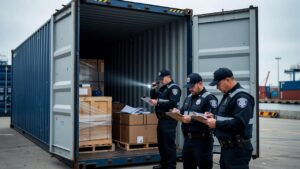
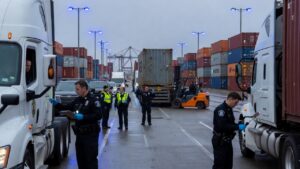
Step 5 — Inspection and release: If selected for exam, CBP may conduct tailgate, intensive, or X-ray inspection. After clearance, the carrier releases the cargo for delivery.
Common Types of Customs Clearance Entries
- Consumption Entry (Type 01): Most common — goods imported for use or sale in the U.S. Duties and taxes paid upon entry.
- Warehouse Entry (Type 21): Goods placed in a bonded warehouse — duties deferred until withdrawal.
- Temporary Importation Under Bond (TIB): Goods imported temporarily for a specific purpose (trade shows, demonstrations) — duty-free if re-exported within the specified period.
- Foreign Trade Zone (FTZ) Entry: Goods admitted to an FTZ — duty payment deferred until goods enter U.S. commerce.
Note on de minimis: Effective August 2025, the $800 de minimis exemption (Section 321) is suspended globally. All shipments — including low-value ocean parcels — now require formal ACE entry with applicable duties.
Roles in the Customs Clearance Process
- Importer of Record (IOR): The entity legally responsible for the import — ensuring compliance, accuracy of filings, and payment of duties. Must hold a valid bond.
- Licensed Customs Broker: A CBP-licensed professional who files entries, classifies goods, calculates duties, and communicates with CBP on behalf of the importer.
- Freight Forwarder: Arranges transportation, coordinates with steamship lines, prepares shipping documents, and can coordinate with customs brokers.
- CBP Officers: Review documentation, conduct inspections, enforce trade laws, and collect duties, taxes, and fees.